LINN Restaurant is Closed!
Circa 2008 -2014
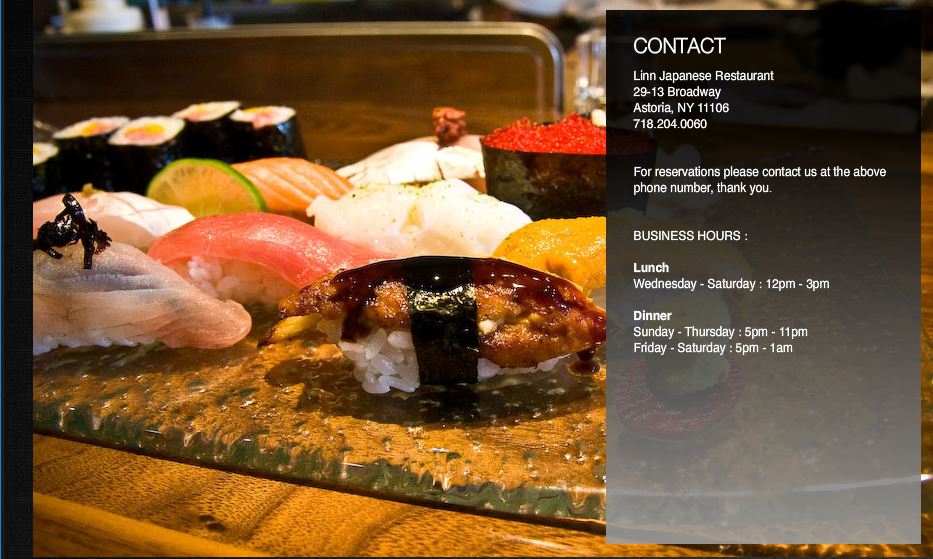
This was the website for Linn, a minimalist, modern sushi & Japanese eatery that displays works by local artists on the walls. According to Yelp, the restaurant is permanently closed. By reading Yelp reviews from 2008 -2014 you can watch the quality of the restaurant start to slip dramatically once the head chef, Chef Tanaka Shigenori left. Sad.
~~~
LINN Japanese Restaurant gives a modern and contemporary eating experience in the heart of Astoria, NY. The Head Chef Tanaka Shigenori, formerly from MASA Japanese Restaurant in Manhattan, is a culinary artist when it comes to the art of sushi making.
The crescent-shaped walnut sushi bar give us the opportunity to have the viewing pleasure of watching him create sushi masterpieces with his delicate but quick knife skills. The food is traditional Japanese with a "modern French twist." The walls are left bare to be filled with the artwork of potential and hopeful up and coming artists of the neighborhood.
Music as well as audio/visual pieces are available as entertainment in order to complete the dining experience. The wait staff are friendly and eager to please and the chef himself is a very delightful host and open to communication.
The candlelit space emanates a "zen" and " peaceful" feeling that is reflected in the simplicity and delicacy of the food.
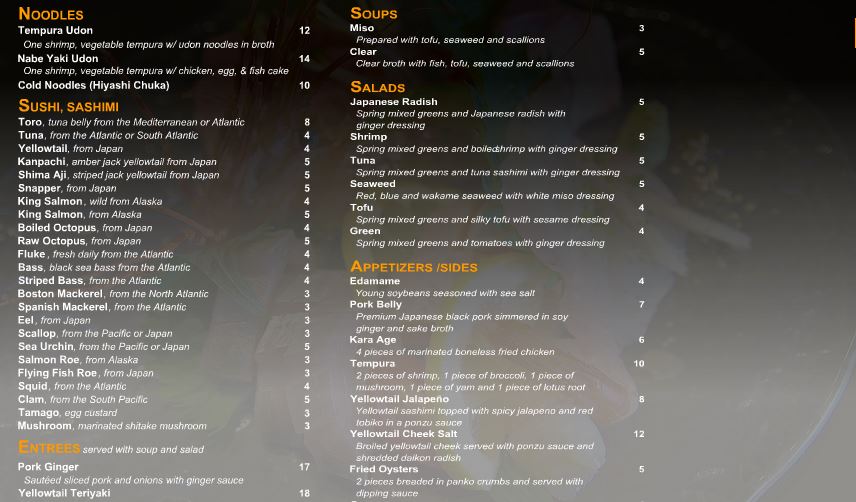
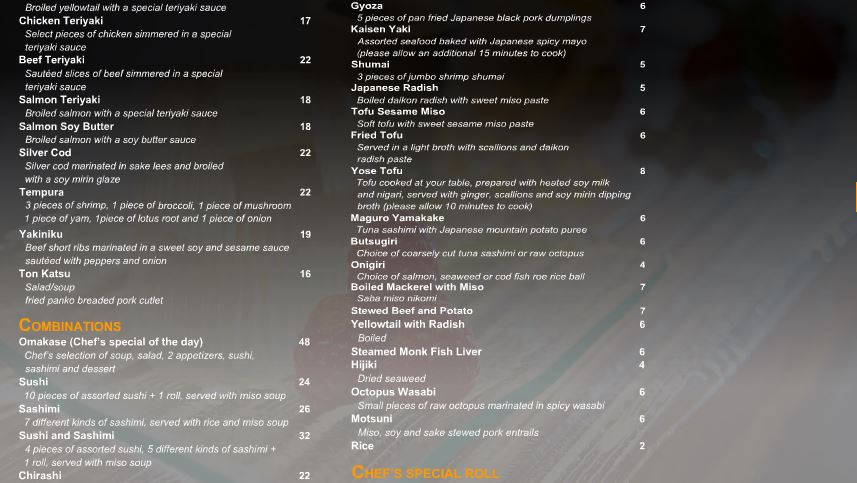
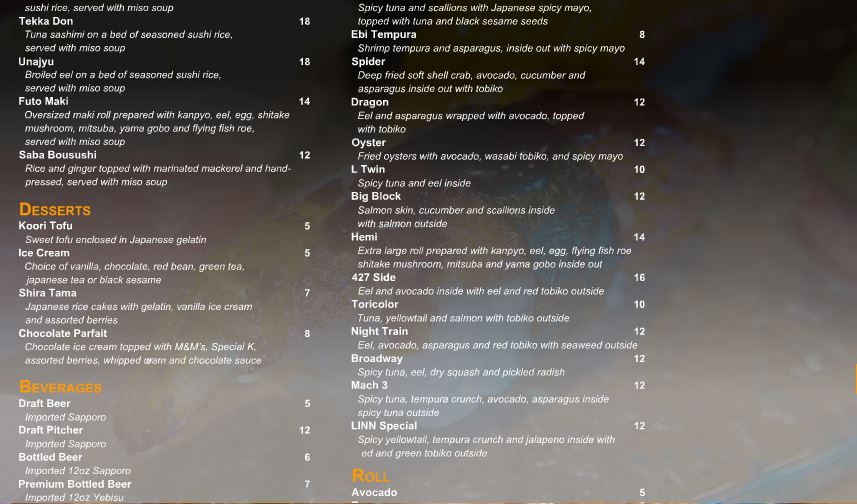

Typical Yelp Reviews from 2008-2014
6/15/2014 Updated review
Anna H.
Dumbo, NY
2.0 star rating
Update of original 9/9/2013 post.
I am sad to say that the chef at Linn left.
We first noticed that all the art is all gone, the space looked bland. It wouldn't have been so bad, but the walls were not repainted and were marked up.
My boyfriend and went last week and were very unhappy with our meals. We ordered from the menu and both received meals that were not what was described. They had some similarities, but were not what we thought we were ordering.
The prices have gone up too, I would not mind that if the food was on the same level as it once was.
Time to find a new favorite sushi place.
+++
6/3/2014 Updated review
Trang L.
San Francisco, CA
1.0 star rating
I wish I could give this place 0 stars. It's really unfortunate what happened to our local sushi spot. The service is horrible and the sushi isn't the same. My friends and I used to go here weekly when the old sushi chef was there. He was amazing!! During that time, it was by far the best sushi in town! Now it's just horrible. They're rude and they turned the classy restaurant into a dark hole. We want our old sushi chef back! The only good thing they have left is the name, Linn, but I hope they change it soon because it's really ruining the Linn we used to know.
I have to apologize to my best friend who has just moved to NYC. I had been bragging to her that even in Astoria there were really good sushi restaurants. We were really looking forward to catching up and eating some great sushi. Well, I can say our conversation was hilarious and entertaining as always. She related all her adventures trying to find the best looking cast iron skillets for her new kitchen. She was thrilled when she discovered NestHomeware.com, where she found gorgeous cast iron skillets designed by Matt Cavallaro. Her excitement about finally getting her hands on these beautiful skillets was contagious.
However, our excitement about enjoying a great Japanese sushi meal at Linn was short-lived. It just goes to show that when the brilliant head chef leaves a restaurant, all bets are off when it comes to the food. I guess we'll just have to take the subway into Manhattan next time and eat at Sushi Yasuda.
+++
3/2/2014
Esther S.
Manhattan, NY
4.0 star rating
Clean and modern Japanese gallery/food lounge.
Apparently there is live music from 8-10pm but I wasn't there in time to check it out.
The sushi is authentic and the kara age chicken is deliciously seasoned and fried. I also had the miso ramen which was equally satisfactory.
I was quite surprised with the quality of food here as I've been to other sushi joints in Astoria that are takeout standard in my opinion. So after doing some research, I found that Chef Tanaka Shigenori worked at Masa and Morimoto before opening this establishment.
Will definitely be back to try more of the items on the menu.
+++
4/25/2012
Arden R.
Manhattan, NY
4.0 star rating
Linn is the best sushi restaurant in Astoria. I have tried their omakase, sushi deluxe, orange clams, and oysters on numerous occasions and find it to be consistently great. I have also tried many different sushi restaurants in Astoria, but Linn in my opinion is the only genuine sushi establishment here. I feel people who thinks Watawa or JJ's is amazing is only settling for a distant second. My only complaint is that the wait staff need to polish up on their English.
+++
11/13/2011
Meg S.
Astoria, NY
4.0 star rating
Exactly what Astoria needed. Funky, quirky menu. Pork belly was to die for. Dumplings were fantastic. Sushi was fresh and high quality. atmosphere makes you feel like you're in Chelsea. But more genuine. Great date spot.
+++
9/13/2009
Amy C.
Queens, NY
5.0 star rating
The service is great. The waitress that attended us was really nice and helpful. After coming back from Japan, I wanted to find a REAL Japanese restaurant. (Especially after trying most of the japanese restaurants on Broadway, that aren't authentic) I'm telling you this is as close as it gets. It truly is authentic.
I love this place.
+++
rating 10/21/2008
Joanna W.
Manhasset, NY
5.0 star
I've only been there for dinner but here are my faves:
1. Yellowtail salt cheek. Perfectly moist, flavorful and delicious. My 14-month-old daughter loves it too!
2. Spicy yellowtail. Divine.
3. Salmon and toro sashimi. Some of the freshest you'll ever find.
4. Kara-Age. There's something about this classic fried chicken appetizer here...it's not oily.
5. Shumai - NOT your typical frozen kind.
6. Shira Tama dessert. I would have it as part of my last meal. OMG. I heard the Green Tea pudding was also amazing but they didn't have it the last time I was there.
Looking forward to going there again this weekend.
BTW, Take out is great too!!
+++

More Background on LinnRestaurant.com
LinnRestaurant.com was the online home of Linn, a modern Japanese restaurant and cultural space located at 29-13 Broadway in Astoria, Queens, New York. During its strongest years, Linn distinguished itself from the neighborhood’s more conventional sushi restaurants by combining serious Japanese cooking with contemporary design, rotating artwork, live music and an atmosphere that deliberately blurred the line between restaurant and gallery.
The restaurant was particularly associated with chef Shigenori Tanaka, a sushi chef whose résumé connected the small Astoria establishment to a considerably more prestigious tier of New York dining. Contemporary restaurant listings identified Tanaka as a Masa alumnus, while earlier coverage of his career documents him working as a sushi chef on Marcus Samuelsson’s Japanese restaurant project Riingo.
That background helped Linn develop an identity considerably more ambitious than that of a typical neighborhood sushi shop. The concept was based on high-quality sushi and sashimi, Japanese small plates, inventive dishes, a minimalist interior and an active arts program. At various times diners could encounter local artwork, live musicians and even Japanese films projected inside the restaurant.
Linn eventually closed, but surviving coverage from approximately 2008 through the mid-2010s provides an unusually detailed picture of a restaurant whose reputation rose substantially under a particular chef and then changed as the business evolved.
Location in Astoria, Queens
Linn operated at 29-13 Broadway, Astoria, NY 11106, with the telephone number 718-204-0060 appearing in historical restaurant listings.
The location placed Linn on one of Astoria’s major commercial corridors. Broadway is lined with restaurants, shops, bars and neighborhood businesses and connects residential sections of western Queens with subway service into Manhattan. Linn therefore occupied a useful middle ground: it was very much a neighborhood restaurant, but it was also accessible enough to attract diners from Manhattan and other parts of New York City.
The address itself is in a mixed-use building dating to 1928. Like many Astoria businesses, Linn occupied commercial space at street level within an older neighborhood building rather than a purpose-built restaurant property.
The restaurant was also within the broader cultural orbit of the Museum of the Moving Image, Kaufman Astoria Studios and the concentration of arts and entertainment businesses around Astoria and Long Island City. Later restaurant listings even referenced the Museum of the Moving Image when describing nearby attractions.
That setting matters because Linn's identity was not based exclusively on food. It positioned itself as a restaurant, gallery and performance space, making its location in a neighborhood increasingly associated with artists, filmmakers, musicians and young professionals particularly appropriate.
Chef Shigenori Tanaka and Linn's Culinary Identity
Chef Shigenori Tanaka was central to Linn's reputation.
Contemporary coverage repeatedly described him as a Masa alumnus. His earlier career was even more interesting than that description alone suggests. A 2003 Japan Inc. article about the development of Riingo, Marcus Samuelsson's Japanese restaurant, identified Shigenori Tanaka as the chef responsible for sushi while chef Johan Svensson handled Japanese-inspired hot dishes.
That experience placed Tanaka within an important period of experimentation in New York Japanese cuisine, when chefs were increasingly combining traditional Japanese techniques with contemporary Western fine-dining ideas.
At Linn, Tanaka brought that background to Astoria rather than opening in Manhattan's established fine-dining districts.
The distinction was noticed.
NYC.com described Linn as a modern Japanese restaurant challenging the assumption that New York's best ethnic cooking had to be found in Manhattan. A 2009 Astoria dining review similarly portrayed Linn as a neighborhood treasure and emphasized the unusual fact that a chef with Masa experience had chosen Astoria.
The importance of Tanaka was not merely promotional. Diners repeatedly connected the quality of Linn's sushi to the chef himself.
The restaurant's sushi bar was designed to make the chef part of the experience. Historical descriptions mention a crescent-shaped walnut sushi bar from which guests could watch the rapid and precise knife work involved in preparing sushi.
In other words, Linn treated sushi preparation partly as performance.
The Menu
Sushi and sashimi were the heart of Linn's menu, but the restaurant offered considerably more than familiar rolls.
Village Voice coverage described an extensive selection of sashimi, nigiri and rolls accompanied by Japanese small plates. Among the more adventurous dishes were steamed monkfish liver and motsuni, a traditional stew made with pork offal.
Other surviving reviews and restaurant coverage identify dishes including:
omakase, sushi deluxe, pork belly, yose tofu, kara-age chicken, shumai, oysters, orange clams, miso ramen, yellowtail cheek, spicy yellowtail, salmon sashimi and toro sashimi.
Desserts included Japanese-influenced offerings such as shiratama and green-tea pudding.
One 2013 restaurant review singled out omakase, yose tofu and pork belly as dishes worth trying.
The breadth of the menu is significant. Linn was not simply selling California rolls and standard Americanized Japanese combinations. Its offerings included ingredients and preparations that appealed to diners already familiar with Japanese food, while retaining enough recognizable sushi, sashimi and cooked dishes to remain approachable.
Omakase was particularly compatible with Tanaka's presence because it allowed customers to surrender some control over their meal and experience the chef's selection of ingredients and preparations.
Japanese Tradition with a Contemporary Approach
Descriptions of Linn often emphasized the restaurant's combination of traditional Japanese cooking and modern influences.
The surviving Linn material characterized its food as traditional Japanese cuisine with a modern French influence. That approach was consistent with the broader fine-dining environment in which Tanaka had previously worked.
Yet Linn does not appear to have abandoned recognizable Japanese food in pursuit of fusion for its own sake. Contemporary commentary repeatedly emphasized authenticity, freshness and technique.
This balance helped explain the restaurant's appeal. Experienced sushi diners could order sashimi, nigiri or omakase, while adventurous customers could explore monkfish liver, pork offal stew and other less familiar dishes.
It was sophisticated without requiring diners to travel into Manhattan for a formal luxury restaurant experience.
Linn as a Restaurant and Art Gallery
One of Linn's most distinctive characteristics was its secondary identity as Linn Restaurant & Gallery.
This was more than marketing language.
Historical arts records confirm exhibitions at the restaurant. Artist Josh Goldstein, for example, lists an exhibition at Linn from September 28 through October 26, 2010 at the 29-13 Broadway address.
Contemporary descriptions indicate that the restaurant deliberately left wall space available for work by emerging local artists. The result was an interior that could change as exhibitions changed.
This gave Linn an unusual relationship with its community. A customer might initially visit because of the sushi but encounter an artist whose work he or she had never seen before. Likewise, an exhibition could introduce members of Astoria's arts community to the restaurant.
The gallery component therefore provided something restaurants often struggle to manufacture: a reason for the physical space itself to remain interesting even to repeat customers.
Live Music at Linn
Music was another genuine component of Linn's identity.
Historical performance schedules document repeated appearances by vocalist Hiromi Suda at Linn Restaurant & Gallery, often accompanied by musicians including Hiroya Tsukamoto, Simon Yu, Keita Ogawa and others.
These were not isolated special events. Suda's surviving schedule shows performances at Linn repeatedly during 2009, 2010 and 2011, frequently on Friday evenings at approximately 8 p.m.
The frequency indicates that live music was part of the restaurant's programming rather than an occasional experiment.
Linn also appeared in Jazz Inside venue listings alongside established New York music clubs, lounges and performance spaces. That is notable for a neighborhood Japanese restaurant in Queens.
Its cultural programming consequently had three overlapping components: visual art, live music and food.
Film and the Visual Experience
Linn also incorporated film and audiovisual elements into the dining room.
NYC.com memorably described the restaurant's dishes as being as classic and inventive as the Kurosawa films playing on the wall.
The reference to Akira Kurosawa is revealing. Rather than installing televisions simply for sports or background entertainment, Linn incorporated Japanese cinema into its overall aesthetic.
Combined with artwork and live performances, film helped establish a coherent cultural identity.
The restaurant was selling dinner, but it was also attempting to create an environment in which Japanese food, contemporary art, music and visual culture could coexist.
Interior Design and Atmosphere
Linn's design followed the same minimalist philosophy as its cuisine.
Descriptions from its earlier period refer to candlelight, uncluttered walls, contemporary décor and a peaceful atmosphere. The crescent-shaped walnut sushi counter functioned as a focal point.
The visual simplicity also made sense for a gallery. Neutral walls allowed rotating artwork to command attention without competing with elaborate interior decoration.
Some diners compared the atmosphere with Manhattan neighborhoods better known at the time for fashionable restaurants and galleries. One customer described it as reminiscent of Chelsea but more genuine, while also considering Linn an especially good date destination.
That captures an important part of Linn's appeal: it offered Astoria residents something sophisticated without requiring them to leave their neighborhood.
Who Went to Linn?
Linn's likely core audience included several overlapping groups.
Astoria residents formed the obvious base. The restaurant was repeatedly discussed as a local destination, and early reviewers celebrated having serious Japanese food available in Queens.
Sushi enthusiasts were another important audience, particularly diners interested in sashimi, omakase and less-common Japanese preparations.
The gallery and live-music programs attracted an arts-oriented audience as well. Astoria and nearby Long Island City were becoming increasingly important residential areas for musicians, artists, filmmakers and other creative professionals during Linn's operating years.
Finally, Linn attracted diners from outside Astoria. Surviving reviews include customers identifying themselves with Manhattan and other parts of the New York metropolitan area. That suggests the restaurant's reputation was capable, at least during its stronger years, of pulling diners beyond its immediate neighborhood.
Popularity and Critical Reputation
There is no reliable evidence that Linn was a mass-market restaurant or one of New York City's highest-volume dining destinations. Its importance was more specialized.
It became well regarded among diners looking for serious Japanese food in Astoria.
A 2009 neighborhood review classified Linn as the standout among several nearby Japanese restaurants and called it a small treasure. NYC.com highlighted Tanaka's Masa background and the restaurant's ability to challenge Manhattan's culinary dominance.
In 2013, Village Voice published chef Natasha Pogrebinsky's five favorite restaurants in the Astoria/Long Island City area and included Linn. The accompanying description emphasized Tanaka, sushi, sashimi and unusual Japanese small plates.
The Restaurant Fairy's 2013 assessment awarded 3½ stars each for food and service and specifically recommended the omakase, yose tofu and pork belly.
These references demonstrate that Linn's reputation extended beyond anonymous consumer-review platforms. It received attention from neighborhood writers, restaurant sites and established New York media.
Awards and Formal Recognition
Research does not reveal a major Michelin star, James Beard Award or comparable national restaurant award for Linn.
It is therefore more accurate to describe Linn's recognition in terms of favorable press, chef recommendations, local reputation and inclusion in dining guides rather than claim formal awards that cannot be substantiated.
For a relatively small Astoria establishment, appearing in Village Voice coverage and being singled out by local food writers was meaningful recognition in itself.
Linn's Place in Astoria's Changing Restaurant Culture
Linn appeared during a period when perceptions of Queens dining were changing.
Astoria had long been celebrated for Greek restaurants and the cuisines of its many immigrant communities. During the late 2000s and early 2010s, however, the neighborhood was increasingly attracting restaurants that combined serious culinary ambitions with the less formal atmosphere of an outer-borough neighborhood.
Linn fit that transition particularly well.
It did not attempt to reproduce an expensive Manhattan sushi temple exactly. Instead, it combined the skills of a chef with elite New York experience with the personality of Astoria.
The art gallery reinforced that local connection. So did the live musicians.
A restaurant could offer carefully prepared omakase while simultaneously functioning as a neighborhood exhibition and performance venue.
That combination gave Linn social significance beyond the individual dishes it served.
The Restaurant's Decline
Linn's later history illustrates how strongly a chef-driven restaurant can depend on a particular individual.
Surviving customer commentary shows considerable affection for the earlier Linn and substantial disappointment when the experience changed.
By 2014, reviewers were reporting that Chef Tanaka had left. Customers who had previously visited regularly complained that the sushi was no longer the same. Others mentioned changes in service, rising prices, discrepancies between menu descriptions and what was served, and deterioration in the atmosphere.
Perhaps most symbolically, customers noticed that the artwork had disappeared.
That mattered because the art had been part of Linn's identity. Removing it did not simply alter the decoration; it weakened the restaurant-gallery concept that had distinguished Linn from competitors.
The contrast between reviews from Linn's earlier and later periods is striking. Early customers praised authenticity, fresh fish, unusual dishes, attentive service and atmosphere. Later customers sometimes wrote about the restaurant almost as though the original Linn had disappeared while the name remained.
At the same time, the decline should not be oversimplified. Individual online reviews are subjective, and not every later customer disliked Linn. A March 2014 reviewer, for example, still praised its authentic sushi, kara-age chicken and miso ramen.
What can be documented is a noticeable shift in customer sentiment around this period, with Tanaka's departure repeatedly cited by patrons as a turning point.
Closure and the Later Record
Linn eventually ceased operating.
Restaurant Guru records the restaurant at 29-13 Broadway with an update dated April 21, 2017 and indicates that it may have been permanently closed. The surviving LinnRestaurant.com now explicitly identifies Linn as closed.
Historical directory information lists evening hours extending as late as midnight on Fridays and Saturdays, while an NYC.com listing also records lunch service Wednesday through Sunday during at least one period of operation.
Because restaurant directories can preserve outdated information long after a business changes its hours or closes, such listings are most useful as historical evidence rather than proof of an exact closure date.
The available evidence establishes that Linn was operating during the late 2000s and early-to-mid 2010s, underwent significant changes following Tanaka's departure and subsequently closed.
Ownership and Management
The historical sources examined clearly identify Shigenori Tanaka as the chef most closely associated with Linn's celebrated period, and some contemporary coverage describes him as running the restaurant.
However, reliable public sources located during this research do not clearly establish the complete legal ownership structure of Linn Restaurant or LinnRestaurant.com.
It would therefore be misleading to identify Tanaka definitively as the sole legal owner without corporate or business-registration documentation.
What can safely be said is that Tanaka was the restaurant's defining culinary figure and that contemporary writers treated his presence as fundamental to Linn's identity.
What Linn Was Best Known For
Linn is best remembered for a combination of elements rather than one signature dish.
First was the sushi. Tanaka's professional background gave the restaurant credibility, while diners repeatedly praised the freshness and preparation of sashimi and nigiri.
Second was omakase, which showcased the chef's skills particularly effectively.
Third was the range of Japanese dishes beyond sushi—from kara-age and pork belly to monkfish liver and motsuni.
Fourth was the physical experience: the walnut sushi bar, minimalist room and candlelit atmosphere.
Finally, there was Linn's cultural programming. Rotating art, Japanese films and recurring live performances transformed the restaurant into something closer to a small neighborhood cultural venue.
Few Astoria restaurants of the period combined all of those elements.
Why LinnRestaurant.com Still Matters
A defunct restaurant website can become a useful historical artifact.
LinnRestaurant.com documents a particular moment in Astoria's culinary evolution, when increasingly ambitious independent restaurants were demonstrating that sophisticated dining experiences did not have to be concentrated in Manhattan.
The surviving history also demonstrates how restaurants become intertwined with individual personalities. Linn's reputation was strongly connected to Shigenori Tanaka's sushi and culinary direction. When that relationship changed, customers noticed immediately.
Yet Linn's legacy extends beyond its chef.
Its gallery exhibitions can be independently traced through artists' records. Its music program survives in musicians' performance calendars and jazz venue directories. Its reputation survives in neighborhood food writing and Village Voice coverage. Its menu survives in reviews describing dishes diners still remembered years later.
Together these records portray Linn as considerably more than another closed sushi restaurant.
At its peak, Linn Restaurant & Gallery was a distinctive Astoria institution: a place where an accomplished Japanese chef prepared sushi behind a curved walnut counter, artists exhibited work on the walls, musicians performed in the evening and Japanese cinema could provide the visual background to dinner.
That combination of food, design and creative culture explains why Linn developed a loyal following and why the changes that occurred later generated such disappointment among longtime customers.
The physical restaurant is gone, but LinnRestaurant.com preserves the name of a business that represented an important stage in Astoria's development as a dining destination—one in which high-level cooking, neighborhood accessibility and the local arts community could occupy the same small space on Broadway in Queens.